10 Pharmaceutical Anti-Counterfeit Solutions That Failed and Why
10 Pharmaceutical Anti-Counterfeit Solutions That Failed and Why

Joshua Akinsanya
5mins
Saturday, August 22, 2026
Joshua Akinsanya
5mins
Saturday, August 22, 2026
For decades, many countries have been waging war against Counterfeits. From Albania to Zimbabwe, every “silver bullet” has had its moment in the spotlight. Most fizzled out. So let’s start at the top of the hall of shame: the first of the top 10 anti-counterfeit “solutions” that utterly failed the once‑almighty incumbent #1;
The ubiquitous but humble Barcode
There are dozens of barcode types used for different purposes across systems and industries around the world. Barcodes are most widely used in retail, where they are highly effective for encoding batch information and product pricing at the point of sale. Recently, several attempts have been made to use bar codes to counterfeit. This seems to be a smart idea. However, there was one problem. Barcodes are easier to falsify.
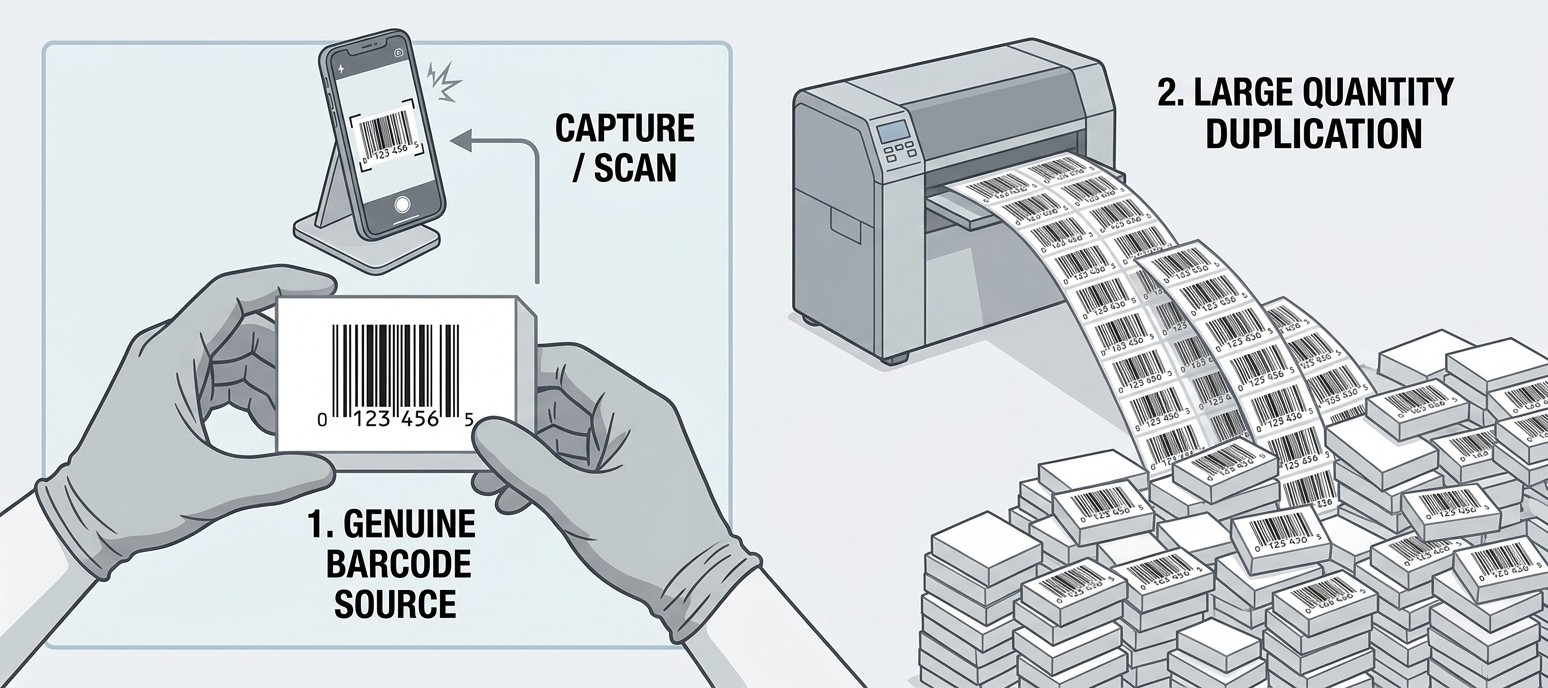
Barcodes are inherently vulnerable, easily falsified, copied, and duplicated. They are indeed excellent for identifying batches rather than individual items. A key limitation is that the technology itself is not designed for item-level security: tens or even hundreds of thousands of units produced within the same batch typically carry an identical barcode, making it less ideal for uniquely identifying a product.
“Take a photo of a genuine barcode, print it on counterfeit packaging, and just like that, a fake product gets a borrowed identity and a remarkably easy path to invisibility“
#Dead on Arrival. Why Scratch-Off Labels/Stickers failed like a dead duck.
Ever scratched a lottery ticket and hoped for a billion-dollar surprise? Counterfeiters felt much the same about scratch-off stickers, except for them, the real jackpot was how easy they were to copy
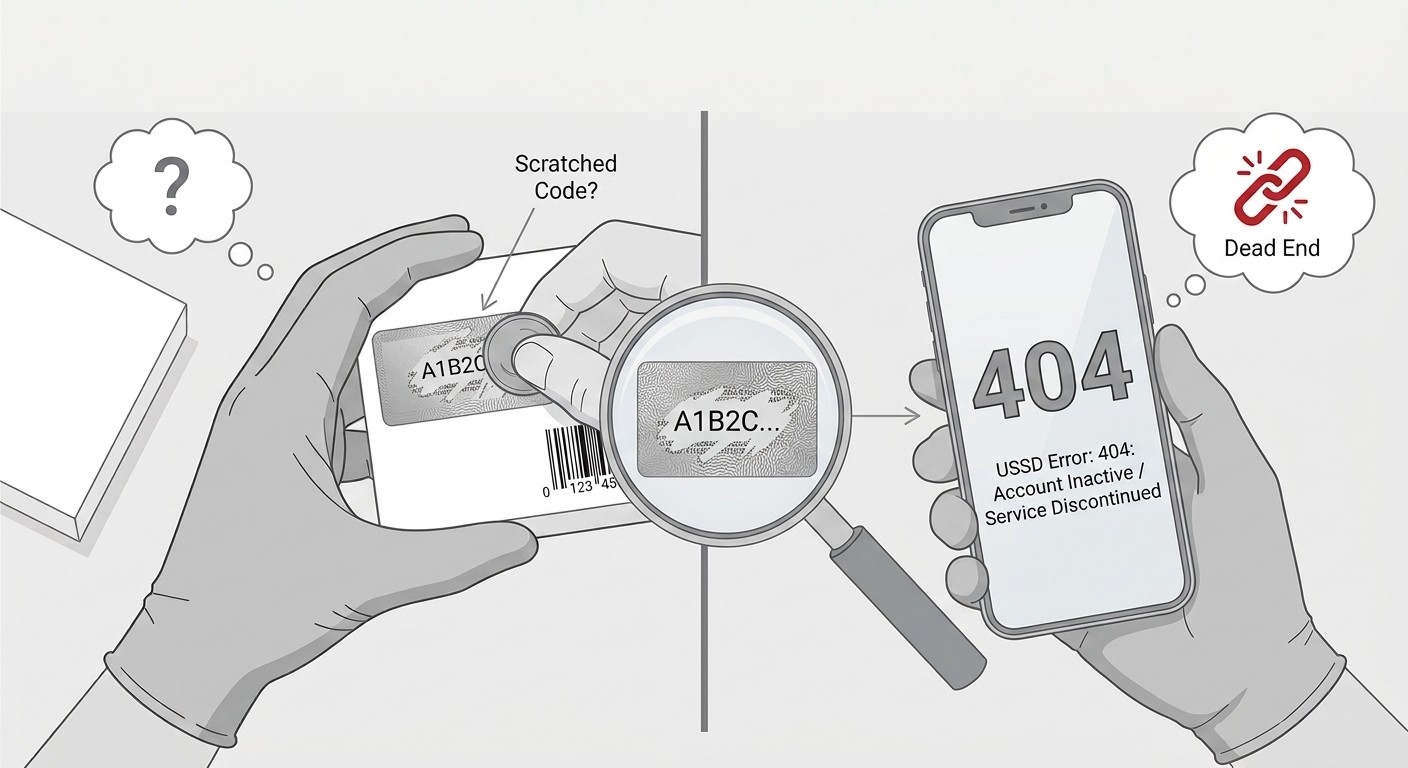
Scratch-off was an effective solution in the Telecommunications recharge cards are physical paper or plastic cards featuring a hidden PIN or recharge code covered by a latex or foil panel, used historically and currently to top up mobile phone airtime or prepaid digital services. Pioneered in the tobacco industry scratch-off was used for promotions as a marketing tactic, which sparked significant controversy. Scratch-offs soon became mainstream, and counterfeiters developed the skill to replicate them, and counterfeit versions became readily available through online marketplaces such as Amazon, eBay, and other e-commerce sites.
The second major issue with scratch-off systems lies in how they function. Users must scratch the card, copy the revealed PIN, and send it by text message, after which a USSD response returns an authentication message. This model generated substantial revenue for lottery operators by turning basic, internet-free mobile phones into instant, cashless gambling terminals. However, it proved highly ineffective for anti-counterfeit purposes.
The economics were shaky from the start: the cost of authenticating a product via USSD could easily exceed the value of the item itself. When network failures occurred, consumers kept trying again and again, driving costs even higher. Before long, stakeholders lost interest in funding the USSD accounts, and the whole system unraveled almost as quickly as it was introduced.
Too expensive to sustain, too easy to copy, yet backed by Regulators.
The disturbing fact is, Today, thousands of products still carry scratch-off stickers that lead absolutely nowhere, security theatre in adhesive form. What was meant to stop counterfeiters now does the opposite: it gives fake products a convincing badge of legitimacy, complete with regulatory backing.
#Chocolate bunny
Why Hologram Stickers did not work in Pharmaceuticals as anti-counterfeit.
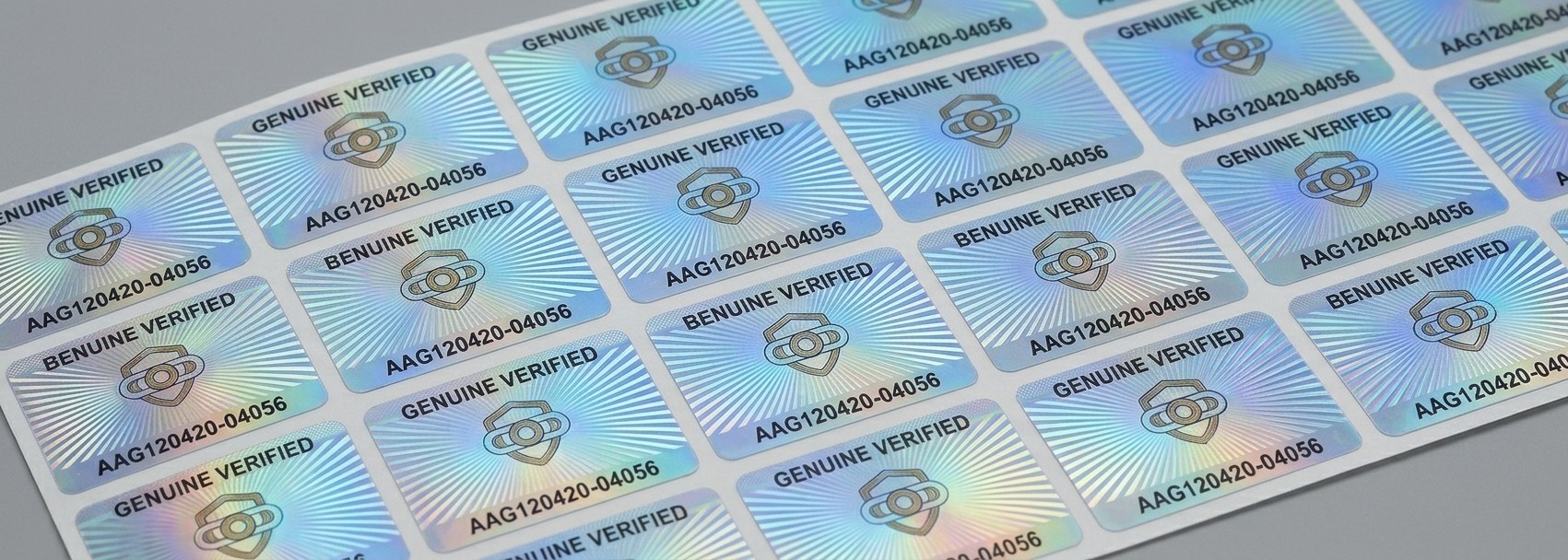
Hologram stickers rely on optical technologies used in specialized printing to create distinctive visual effects that are intended to be difficult to replicate. For that reason, they have long been regarded as a valuable tool for product authentication, brand protection, and enhanced packaging security. However, for counterfeiters, they adapt swiftly and deliberately, “No holds barred”. Hologram stickers look impressive on the outside, but offer little real protection, like a chocolate bunny that looks solid until you realize it’s hollow.
#Touch not my anointed.
Why Tamper proof Tapes failed in Pharmaceuticals
Have you ever purchased a product that required you to remove a tape before accessing the contents of the package? Tamper-evident tapes are essentially standard adhesive seals, sometimes colored, sometimes transparent, designed with strong bonding properties so that removing them leaves visible damage on the packaging material
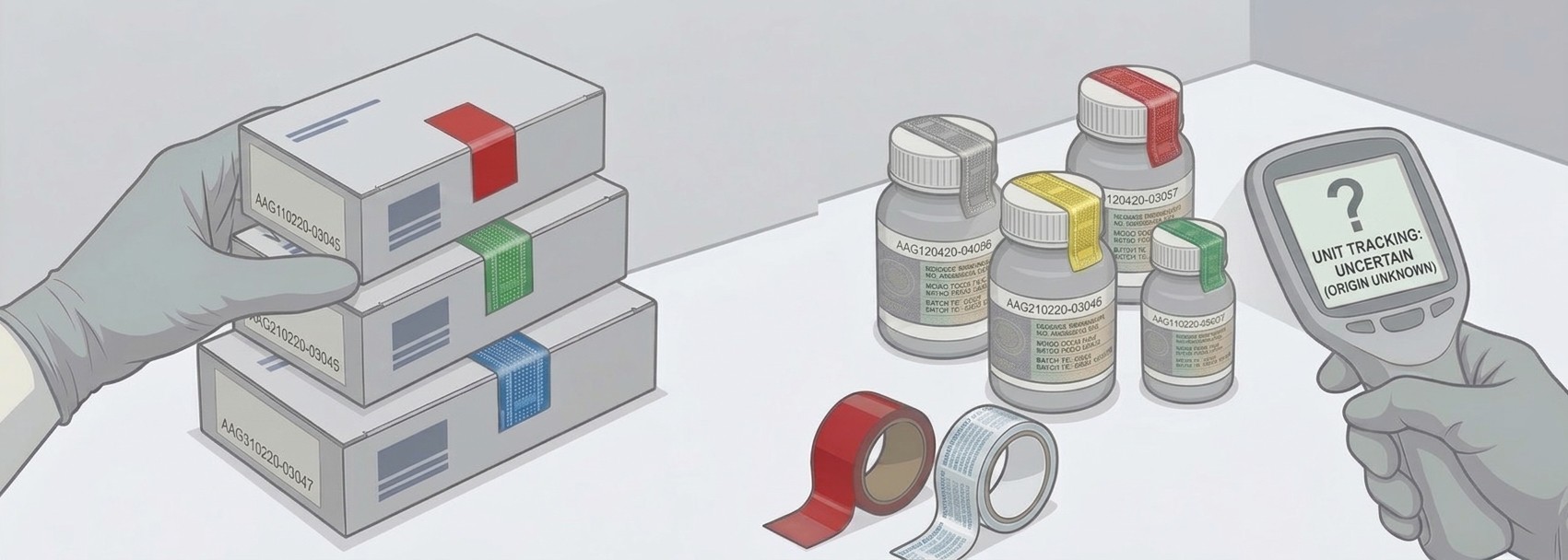
Although tamper-evident tapes are highly effective for their intended purpose, they remain relatively expensive and in most cases, counterfeiters do not tamper with genuine products; instead, they produce highly convincing imitations that even original manufacturers may struggle to distinguish from authentic items. Generic tamper-evident tapes are also readily available for purchase, including by counterfeiters, and there is often no reliable way for supply chain stakeholders to determine which tape is genuine.
“Tamper-proof tapes were applied to pharma packaging almost as if the labels declared, ‘Touch not my anointed.’ Counterfeiters, however, saw them for what they were: another leaky basket, offering the appearance of protection, but holding none of it.”
#counterfeit-friendly serialization model.
Why Serialisation failed to stop the Pharmaceutical Counterfeits epidemic
Printing a serial number on the pack was marketed as the definitive answer to counterfeiting. Counterfeiters were hardly intimidated. If anything, the system made their job easier: copy serial numbers from genuine products, place them on counterfeit versions, and inherit a ready-made seal of legitimacy. It was less a barrier than a business opportunity.
Here is the hard truth, Serialization; the simple practice of printing serial numbers on a package never truly stood a chance. Pharmaceutical counterfeiters continued to prevail, with fake products often carrying serial numbers that appeared entirely authentic. In many cases, those numbers were simply copied from genuine products, making proactive detection extremely difficult. So why has Pharmaceutical serialisation implementation failed miserably.
“Undeniably what was presented as a robust defense, the serialization model functioned more like an illusion-of-security system.”
So why did pharmaceutical serialization implementation fail so badly? The fundamental weakness lies in the assumption that printed text, or other visual identifiers alone could serve as an effective defense against counterfeiting. The central question, however, remains: if the solution itself is easily reproducible, how can it reliably stop counterfeit products?
For decades, many countries have been waging war against Counterfeits. From Albania to Zimbabwe, every “silver bullet” has had its moment in the spotlight. Most fizzled out. So let’s start at the top of the hall of shame: the first of the top 10 anti-counterfeit “solutions” that utterly failed the once‑almighty incumbent #1;
The ubiquitous but humble Barcode
There are dozens of barcode types used for different purposes across systems and industries around the world. Barcodes are most widely used in retail, where they are highly effective for encoding batch information and product pricing at the point of sale. Recently, several attempts have been made to use bar codes to counterfeit. This seems to be a smart idea. However, there was one problem. Barcodes are easier to falsify.
Barcodes are inherently vulnerable, easily falsified, copied, and duplicated. They are indeed excellent for identifying batches rather than individual items. A key limitation is that the technology itself is not designed for item-level security: tens or even hundreds of thousands of units produced within the same batch typically carry an identical barcode, making it less ideal for uniquely identifying a product.
“Take a photo of a genuine barcode, print it on counterfeit packaging, and just like that, a fake product gets a borrowed identity and a remarkably easy path to invisibility“
#Dead on Arrival. Why Scratch-Off Labels/Stickers failed like a dead duck.
Ever scratched a lottery ticket and hoped for a billion-dollar surprise? Counterfeiters felt much the same about scratch-off stickers, except for them, the real jackpot was how easy they were to copy
Scratch-off was an effective solution in the Telecommunications recharge cards are physical paper or plastic cards featuring a hidden PIN or recharge code covered by a latex or foil panel, used historically and currently to top up mobile phone airtime or prepaid digital services. Pioneered in the tobacco industry scratch-off was used for promotions as a marketing tactic, which sparked significant controversy. Scratch-offs soon became mainstream, and counterfeiters developed the skill to replicate them, and counterfeit versions became readily available through online marketplaces such as Amazon, eBay, and other e-commerce sites.
The second major issue with scratch-off systems lies in how they function. Users must scratch the card, copy the revealed PIN, and send it by text message, after which a USSD response returns an authentication message. This model generated substantial revenue for lottery operators by turning basic, internet-free mobile phones into instant, cashless gambling terminals. However, it proved highly ineffective for anti-counterfeit purposes.
The economics were shaky from the start: the cost of authenticating a product via USSD could easily exceed the value of the item itself. When network failures occurred, consumers kept trying again and again, driving costs even higher. Before long, stakeholders lost interest in funding the USSD accounts, and the whole system unraveled almost as quickly as it was introduced.
Too expensive to sustain, too easy to copy, yet backed by Regulators.
The disturbing fact is, Today, thousands of products still carry scratch-off stickers that lead absolutely nowhere, security theatre in adhesive form. What was meant to stop counterfeiters now does the opposite: it gives fake products a convincing badge of legitimacy, complete with regulatory backing.
#Chocolate bunny
Why Hologram Stickers did not work in Pharmaceuticals as anti-counterfeit.
Hologram stickers rely on optical technologies used in specialized printing to create distinctive visual effects that are intended to be difficult to replicate. For that reason, they have long been regarded as a valuable tool for product authentication, brand protection, and enhanced packaging security. However, for counterfeiters, they adapt swiftly and deliberately, “No holds barred”. Hologram stickers look impressive on the outside, but offer little real protection, like a chocolate bunny that looks solid until you realize it’s hollow.
#Touch not my anointed.
Why Tamper proof Tapes failed in Pharmaceuticals
Have you ever purchased a product that required you to remove a tape before accessing the contents of the package? Tamper-evident tapes are essentially standard adhesive seals, sometimes colored, sometimes transparent, designed with strong bonding properties so that removing them leaves visible damage on the packaging material
Although tamper-evident tapes are highly effective for their intended purpose, they remain relatively expensive and in most cases, counterfeiters do not tamper with genuine products; instead, they produce highly convincing imitations that even original manufacturers may struggle to distinguish from authentic items. Generic tamper-evident tapes are also readily available for purchase, including by counterfeiters, and there is often no reliable way for supply chain stakeholders to determine which tape is genuine.
“Tamper-proof tapes were applied to pharma packaging almost as if the labels declared, ‘Touch not my anointed.’ Counterfeiters, however, saw them for what they were: another leaky basket, offering the appearance of protection, but holding none of it.”
#counterfeit-friendly serialization model.
Why Serialisation failed to stop the Pharmaceutical Counterfeits epidemic
Printing a serial number on the pack was marketed as the definitive answer to counterfeiting. Counterfeiters were hardly intimidated. If anything, the system made their job easier: copy serial numbers from genuine products, place them on counterfeit versions, and inherit a ready-made seal of legitimacy. It was less a barrier than a business opportunity.
Here is the hard truth, Serialization; the simple practice of printing serial numbers on a package never truly stood a chance. Pharmaceutical counterfeiters continued to prevail, with fake products often carrying serial numbers that appeared entirely authentic. In many cases, those numbers were simply copied from genuine products, making proactive detection extremely difficult. So why has Pharmaceutical serialisation implementation failed miserably.
“Undeniably what was presented as a robust defense, the serialization model functioned more like an illusion-of-security system.”
So why did pharmaceutical serialization implementation fail so badly? The fundamental weakness lies in the assumption that printed text, or other visual identifiers alone could serve as an effective defense against counterfeiting. The central question, however, remains: if the solution itself is easily reproducible, how can it reliably stop counterfeit products?
Copy to Clipboard
Copied
2026 Validproof.
2026 Validproof.
2026 Validproof.